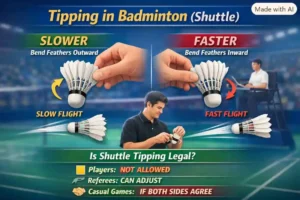
Tipping in badminton (Shuttle) is when you bend the feathers on a shuttlecock to change how fast it flies. If you bend the feathers outward, the shuttle slows down but if you bend them inward, it goes faster. Players do this quick fix during casual games or league matches to adapt to how the court is playing that day.
Is Shuttle Tipping Legal in Badminton?
Shuttle tipping in badminton isn’t just “allowed” or “not allowed”, it really depends on who’s doing it and what gives them the right to do it.
Players: Based on BWF Law 16.6, players can’t intentionally mess with a shuttle’s speed or how it flies by tipping it. If they do, they might get hit with penalties like a yellow or red card.
Referees: Referees get to tip shuttles when they’re officially testing how fast they go before games start. This helps make sure the shuttle works right depending on where you’re playing (like how humid it is or how high up you are).
Umpires: Umpires allow or forbid tipping during match but players themselves cannot perform it.
Casual/League Matches: When there’s no referee around, tipping is okay only if both teams say it’s cool.
How Shuttle Tipping Affects Speed
When you tip a shuttle by bending its feathers, you can change how fast it moves through the air. If you bend the feathers outward, the shuttle slows down because there’s more air resistance. If you bend them inward, it speeds up because there’s less air resistance. Referees do this to make sure the shuttle’s speed matches the court’s conditions like how hot it is, how humid it is or how high up you are. The BWF test checks whether a shuttle lands between the short service lines. Tipping is basically a small tweak that helps get the shuttle into the right legal zone without messing it up.